
The diamond industry just had its Blockbuster moment, and most people don’t even realize it yet.
For over a century, De Beers controlled everything: diamonds are rare, diamonds are forever, and if you love someone, you’d better spend three months’ salary proving it. That empire? It’s cracking. Not from cheaper alternatives—but from laboratories creating actual diamonds that even experts can’t tell apart from mined ones. A lab-created diamond ring in a jewelry store today looks identical to its mined counterpart, costs 60-80% less, and comes without the ethical mess. That’s not disruption. That’s a market earthquake.
The Monopoly That Couldn’t Last
De Beers didn’t just sell diamonds. They sold the entire concept of what diamonds should mean. The “A Diamond is Forever” campaign, launched in 1947, literally invented the engagement ring tradition most people think is ancient. Before that marketing genius, engageme
nt rings were nice but optional. Afterwards? Cultural law.
At their peak, De Beers controlled roughly 90% of the world’s diamond supply. They could set prices, manage inventory, and keep diamonds expensive and “rare.” But monopolies have a fatal flaw—they make markets incredibly attractive for disruption. And when that disruption comes from science rather than competition for the same rocks? The whole game changes.
When Chemistry Became the Competition
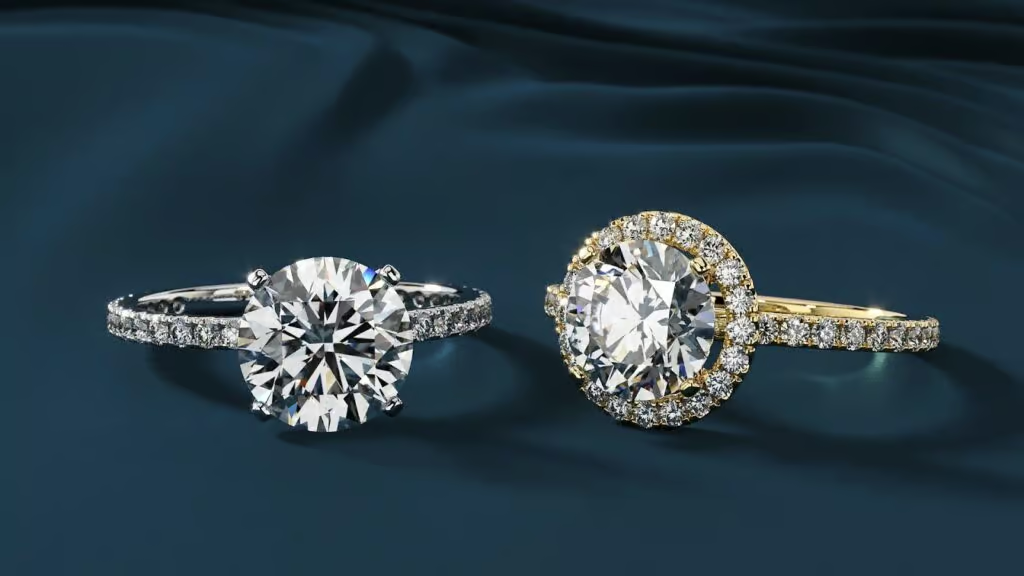
Lab-grown diamonds aren’t new. Scientists made the first ones in the 1950s for industrial applications. But gem-quality stones you’d actually want in an engagement ring? That technology only got good recently, and it’s improving fast.
High Pressure High Temperature (HPHT) and Chemical Vapor Deposition (CVD) methods now produce diamonds that are chemically, physically, and optically identical to mined diamonds. Not similar. Identical. Same carbon structure, same hardness, same sparkle.
A gemologist needs specialized equipment to tell them apart, and even then, they’re only identifying the production method, not finding any quality difference. To the naked eye? To cameras? To anyone wearing the ring? There’s zero difference.
The Price Collapse Nobody Saw Coming
When your entire market value depends on scarcity, and suddenly scarcity becomes optional, prices do very interesting things.
The timeline:
- 2016: Lab-grown costs about 15-20% less than mined
- 2020: Gap widened to 40-50% less
- 2024: Lab-grown now costs 60-80% less
- 2026: The gap keeps growing
This isn’t a sale. This is a structural market disruption. Production costs for lab-grown keep dropping while mining costs keep rising. For consumers, especially younger ones, the math is simple: identical product, fraction of the price, clearer conscience.
Gen Z Didn’t Buy the Marketing
Older generations bought the De Beers narrative completely. But Millennials and Gen Z? They Google everything, question traditional marketing, and value transparency over prestige.
What younger buyers actually care about:
- Where products really come from
- Environmental impact
- Whether their money supports practices they oppose
- Value that makes logical sense
Diamond mining fails every test. Environmental damage is visible from satellites. Labor practices in some regions range from sketchy to horrifying. Tracking a diamond’s journey is basically impossible.
Lab-grown diamonds? Origin is a lab with an address. The environmental footprint is smaller. No ethical gray area. The supply chain is transparent. For a generation that already disrupted taxis, hotels, and television, disrupting diamonds is just Tuesday.
The Industry Fights Back (Badly)
The natural diamond industry’s response has been catastrophically bad. They claimed lab-grown aren’t “real” (they are, scientifically). They marketed natural diamonds as more “authentic” or “romantic.” They emphasized the “journey” of mined stones.
The problem? These arguments fall flat. The “journey” pitch doesn’t work when that journey potentially involves child labor and environmental destruction. The romance angle dies when people realize the tradition is less than 80 years old and was manufactured by an ad campaign.
Some retailers tried to refuse to carry lab-grown entirely. Then they watched customers shop elsewhere and quietly reversed course.
The Market Numbers Are Brutal
The shift:
- 2015: Lab-grown products were less than 1% of the market
- 2023: They hit 15-20% market share
- Projections: Almost $50 billion by 2030
Engagement rings for first-time buyers? Already approaching 50% lab-grown.
De Beers—the company that created modern diamond marketing—now produces lab-grown diamonds through a subsidiary. That’s not adaptation. That’s surrender with good PR.
The Investment Myth Dies
For decades, part of the pitch was investment value. Buy a diamond, it holds value, maybe appreciates. That was always questionable. Now it’s dead.
Lab-grown prices keep dropping as production improves. But here’s the reality: most engagement ring buyers never planned to resell anyway. The “investment” angle was just psychological comfort. Once people realize they’re buying jewelry to wear forever, the argument for paying 5x more evaporates.
The Ripple Effects
This disruption isn’t staying contained. Colored gemstones are following the same path. The entire “luxury based on scarcity” concept is being questioned. Countries dependent on diamond revenue face economic crisis.
Environmental regulations are getting stricter globally, increasing mining costs. Meanwhile, lab-grown production gets more efficient and runs on renewable energy. The cost curves go in opposite directions.
Conclusion
Lab diamonds aren’t shaking up the market just because they are less expensive than natural diamonds. They are revealing the emperor has no clothes.
De Beers didn’t discover that diamonds are no more rare than any gem. They never made a good investment–go on, try selling one. The tradition of the engagement ring is not ancient; it is 1940s marketing.
Lab-grown diamonds compel the industry to compete based on true value, rather than a manufactured aura. And when you remove the mystique? The traditional industry has little left.
The diamond industry spent a century building an empire based on scarcity and romance. Technology just made scarcity optional, and Gen Z doesn’t buy the romance story. That’s not a problem you can market your way out of. That’s a structural shift, and it’s just getting started.
The question isn’t whether lab-grown diamonds will take over. It’s how long traditional players can delay the inevitable.