

Industrial gas monitoring often goes unnoticed until a serious incident occurs. Hydrogen chloride (HCl) presents unique challenges that require specialized detection systems. Based on over a decade of experience in industrial safety systems, this article examines how HCl gas detectors function as essential safety infrastructure in chemical processing, semiconductor manufacturing, and pharmaceutical facilities.
Understanding the HCl Threat Profile
Hydrogen chloride is highly corrosive and toxic, with OSHA setting the permissible exposure limit at 5 parts per million (ppm). Being denser than air, it accumulates in low-lying areas and floor-level spaces.
What makes HCl particularly dangerous is that its odor threshold—approximately 0.8 to 5 ppm—overlaps with exposure limits. At 35 ppm, throat irritation becomes immediate. At 100 ppm and above, exposure can cause severe respiratory damage within minutes.
The Technology Behind HCl Detector

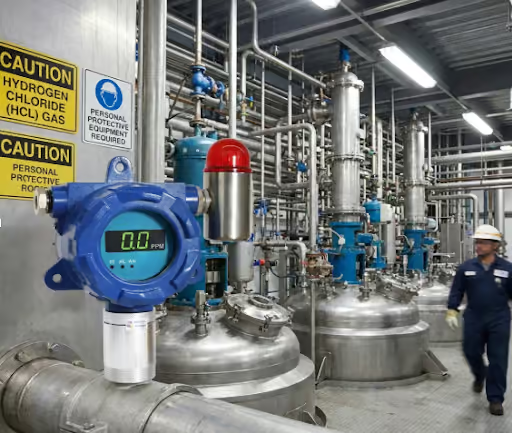
Modern HCl detectors primarily use electrochemical or metal-oxide semiconductor (MOS) sensors. Electrochemical sensors offer 0.1 ppm resolution with 30-60 second response times, providing accurate readings in the 0-30 ppm range where industrial monitoring needs precision. Metal-oxide sensors respond faster—often within 15-30 seconds—but may show cross-sensitivity to other acidic gases. Facilities handling higher concentrations or needing rapid emergency shutdowns often choose MOS sensors, while those prioritizing precision for micro-leak detection prefer electrochemical types.
When evaluating specific detector models, comparing technical specifications across manufacturers is essential to ensure the sensor meets your application requirements. Industrial gas detector suppliers such as GasDog typically provide detailed specification sheets outlining response time, detection range, operating temperature, and sensor lifespan—key parameters for making informed procurement decisions.
Choosing the Right Detection System: A Practical Approach
Sensor Type Selection
Selecting an HCl detection system involves matching your facility’s specific conditions to sensor capabilities. If you’re monitoring process areas where leaks would likely stay below 20 ppm, electrochemical sensors offer the precision needed to catch micro-leaks that could corrode equipment over time. Facilities needing sub-30-second alarm response for emergency shutdowns often lean toward metal-oxide sensors despite their occasional cross-sensitivity.
Calculating Coverage Requirements
Coverage area determines how many detectors you’ll actually need, and this is where many facilities underestimate. A single detector typically covers about 400-600 square feet in open spaces, but that assumes ideal conditions. In reality, structural obstructions, HVAC patterns, and equipment layouts create dead zones. A 5,000 square foot processing room might need 12-15 detectors rather than the theoretical eight. During one facility assessment, we found a blind spot behind a chemical storage rack where HCl had been accumulating undetected for weeks.
Strategic Positioning
Installation positioning matters more than sheer detector quantity. Because hydrogen chloride sinks, placing sensors within 18 inches of the floor is essential. However, ground-level detection alone is insufficient. Mid-height sensors at breathing-zone level—approximately 4-5 feet—are critical, as this is where worker exposure typically occurs first. Near high-risk locations such as cylinder storage areas, valve manifolds, and transfer connections, positioning detectors within 10-15 feet provides early warning.
In one chemical processing facility, a three-tier detection strategy was implemented: low-level sensors at 6 inches above floor drains, mid-level units at 3 feet to detect dispersing plumes, and high-level monitors near ventilation intakes. This configuration identified a slow gasket leak within 90 minutes—the low-level sensor registered 1.2 ppm while mid- and high-level sensors remained at zero. That early alert prevented what could have developed into a 12-hour corrosion event affecting underground piping.
Setting Alarm Thresholds
Alarm thresholds need to match both regulatory limits and operational reality. Setting the first warning level around 2 ppm gives early notice without constant nuisance alarms. The OSHA ceiling limit of 5 ppm should trigger local alarms and increase ventilation automatically. At 10 ppm, full emergency response—area evacuation, maximum ventilation, and immediate investigation—becomes necessary. These graduated thresholds prevent both complacency from false alarms and panic from delayed warnings.
Calibration and Maintenance Realities
Sensor accuracy degrades over time through exposure to target gases, humidity, and temperature fluctuations. Manufacturer specifications typically call for calibration every 6-12 months, with electrochemical sensors having operational lifespans of 24-36 months under normal conditions. Using certified gas standards with proper storage is essential for maintaining accuracy.
Common Mistakes That Compromise Detection Systems
Mounting Detectors Too High
The most frequent error is mounting detectors too high. Facilities treat HCl sensors like smoke detectors and place them near ceilings. Since HCl is 26% heavier than air, it drops and pools at ground level. A ceiling-mounted detector might not register anything while HCl concentrations at floor level reach hazardous levels. I’ve walked into facilities where all detectors showed zero, then held a portable meter at knee height and immediately got readings over 3 ppm.
Ignoring Calibration Drift
Calibration drift gets ignored until something forces attention to it—usually a near-miss incident or audit finding. During a pharmaceutical facility audit, we found calibration gas cylinders stored in a hot maintenance shop where temperatures regularly exceeded 85°F. The gas composition had degraded to the point where ‘calibrating’ sensors actually made them less accurate. Proper calibration gas storage means climate-controlled environments and tracking expiration dates.
Inadequate Detector Coverage
Relying on a single detector in a large space creates dangerous blind spots. I’ve seen 2,000 square foot rooms with one centrally-placed detector, under the assumption that gas will eventually reach it. But HCl doesn’t diffuse uniformly—it follows airflow patterns, collects behind equipment, and pools in low spots. A leak behind a storage rack 40 feet from the detector might not register for hours.
Environmental Interference
Environmental interference causes more false alarms than actual leaks. High humidity above 85% can trigger electrochemical sensors. Mounting detectors near HVAC vents or loading dock doors—where temperature and humidity fluctuate—guarantees nuisance alarms. After a few false evacuations, staff start ignoring alarms entirely, which defeats the entire purpose.
Integration with Safety Systems
Standalone detectors provide limited value. Real safety infrastructure emerges when detection integrates with building management systems, distributed control systems, and emergency response protocols. Modern detectors communicate via 4-20 mA analog signals, Modbus, or wireless protocols.
Multi-stage alarm setpoints create graduated responses. A typical configuration: 2 ppm triggers a warning alert and data logging, 5 ppm activates local alarms and increased ventilation, and 10 ppm initiates emergency ventilation and area evacuation. This tiered approach prevents both alarm fatigue and delayed emergency response.
Technology alone proves insufficient—the human factor remains critical. Quarterly training with simulated detector alarms can significantly improve emergency response times and system effectiveness.
Predictive Maintenance Through Detection Data
Beyond immediate safety, HCl gas detectors generate valuable trend data for predictive maintenance. Gradual baseline increases—from 0.1 ppm to 0.8 ppm over several weeks—often indicate developing seal failures, valve packing deterioration, or flange gasket degradation. This enables condition-based maintenance rather than reactive repairs.
At a chlor-alkali plant, trending analysis identified gradual HCl increases tied to specific process cycles, allowing maintenance before a major release occurred.
Regulatory Compliance and Documentation
HCl detection systems fall under multiple regulatory frameworks. OSHA’s Process Safety Management standard requires continuous monitoring for covered processes. EPA’s Risk Management Program mandates detection systems as part of release prevention.
Documentation requirements extend beyond installation records. Facilities must maintain calibration certificates, maintenance logs, and alarm response records. During regulatory inspections, auditors commonly request 12-24 months of historical data to verify system reliability.
Conclusion
Hydrogen chloride gas detectors represent a critical control layer in industrial safety systems. Their effectiveness depends on appropriate technology selection, strategic placement based on gas physics, rigorous maintenance protocols, and integration with both technical systems and human response capabilities.
The facilities that achieve the best safety outcomes treat gas detection not as a compliance checkbox but as an active safety partner—one that provides continuous intelligence about conditions that human senses cannot reliably detect.