

Drivers enjoy the freedom their vehicles provide them, but that wouldn’t be possible without the right tires. For some, getting a new set can turn into a confusing and exhausting journey. And who can blame them? The tire market is saturated with versatile models, each with different markings and specifications. Keeping track of all these details can be overwhelming.
Fortunately, tire sizes are easy to understand once you know how to read them. It’s also quite helpful once you understand all its nuances. Essentially, these markings allow you to make a more informed decision.
So, let’s take the 275/60R15 size as an example. It’s common for trucks and muscle cars, mostly because models of these dimensions give the right appearance, performance, and ride quality. Let’s take a closer look at this size to see what else it has to offer.
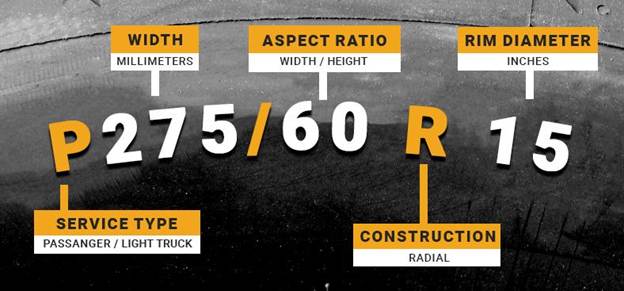
What Each Number Does 275/60R15 Represent?
Many vehicles sport the 275/60R15 tires. This is the case because they can equip a tire of certain dimensions, which is also good for specific performance characteristics. This means that one tire size enables certain characteristics, while another size promotes others. We’ll touch upon this later, but now, let’s focus on each individual segment of the tire size.
The tire width is shown with the first number. That means the tire in our example is 275 mm wide. The next number is called the aspect ratio, which shows that our tire’s height is 60% of its width. In short, it tells us how tall the tire is, with larger numbers meaning a taller tire.
The last number informs us about the rim diameter, signifying that our tire can only be mounted on 15-inch wheels. Last, but not least, the only letter in the sequence tells us about the tire’s construction. The R represents a radial, standard structure, which supports the model from within.
What Vehicles Use 275/60R15 Tires?
While many vehicles can use this particular size, it’s frequently found on trucks and muscle cars. They sport them for better traction and a wider, more aggressive look. Here are some common vehicle applications:
- Pontiac GTO
- Dodge Charger (1968-1974)
- Ford F-150/F-250 (common older models)
- Chevrolet Chevelle/El Camino
- GMC C1500 (Sierra, SLE, SLX) for 1990-1992 models
In order to ensure a safe performance, it’s best to consult your local mechanic to determine whether you can mount this tire size on your vehicle with or without modifications. After all, safety comes first.
Pros and Cons of 275/60R15 Tires
Now that we’re familiar with the concept of tire size, along with the vehicles that use 275/60R15 tires, we can finally address the characteristics they provide. Let’s start with the benefits.
- Improved Comfort – Tires with taller sidewalls are better at absorbing road imperfections, resulting in minimal vibrations. This makes them ideal for journeys where smooth travel matters the most, like family road trips.
- Enhanced Traction – Larger tire dimensions create a larger contact patch with the road. It provides more stability and a stronger grip, which is valuable for muscle cars and their quicker acceleration.
- Unique Aesthetics – The aggressive style is often achieved with taller, wider tire sizes, which can further be augmented with offsets and other modifications. This creates a unique appearance that many drivers favor.
Of course, no tire size is perfect for every situation. As such, you can’t rely on one tire size to be the right fit for every car and every aspect of driving. Here are some disadvantages to take into account when considering these tires:
- Limited Availability – As the tire industry developed, so did the trends. Nowadays, 15-inch wheels are becoming less common in comparison to their 17- and 20-inch counterparts. This means the availability is constantly diminishing.
- Fuel Efficiency – Each tire requires a certain amount of energy to start rolling and maintain its motion. Unfortunately, larger tires got the short end of the stick, as they require more fuel for their performance.
- Fitment Challenges – Due to their sheer dimensions, the width of these tires can work against them, leading to rubbing issues with inner fenders or frame components. If left unchecked, this can lead to tire failure, in addition to other consequences.
What to Look for When Buying 275/60R15 Tires
If you’ve opted for 275/60R15 tires, it means the pros outweigh the cons. However, there are some additional aspects of tires to consider before purchasing.
It’s important to select the right tire type for your performance. Whether it’s a high performance tire fit for muscle cars or a touring and highway model for a smooth drive, each tire can only deliver what it was designed for. Anything more results in a blowout or a potential accident.
When determining the weight and speed the tire can safely handle, check the additional markings that come after the tire size. These are the load index and the speed rating, often appearing in a combination of a number and a letter, like 107W.
The tread pattern also directly impacts the tire’s performance. The design and configuration of tread elements determine grip, quietness, and even fuel consumption. The last one is crucial, particularly in today’s economy and the surging oil prices.
Speaking of prices, the cheapest offers are not worth it, as they compromise quality and safety. Your available choices are either budget-friendly options or premium models. It’s best to decide on a budget and stick to it to prevent overspending.
Conclusion
Selecting a tire size is more than just choosing a tire for the right fit. It’s a key to customizing your driving experience. With numerous options to pick from, it can be daunting to go through the selection. However, focusing on your needs can help you narrow down the number to a select few.
That said, the 275/60R15 tire size is an ideal choice for regular SUVs and trucks, as much as it is for muscle cars. It satisfies the sweet spot of balanced performance, aesthetics, and comfort, making it ideal for modern drivers.