

Prepaid cards remain a popular payment method because they offer a balance of security and spending control. You load money in advance, spend only what’s available and keep your main bank account separate. For many users, that feels safer than linking a debit or credit card directly. But whether prepaid cards are truly the safest option depends on how you define safety.
What prepaid cards actually do
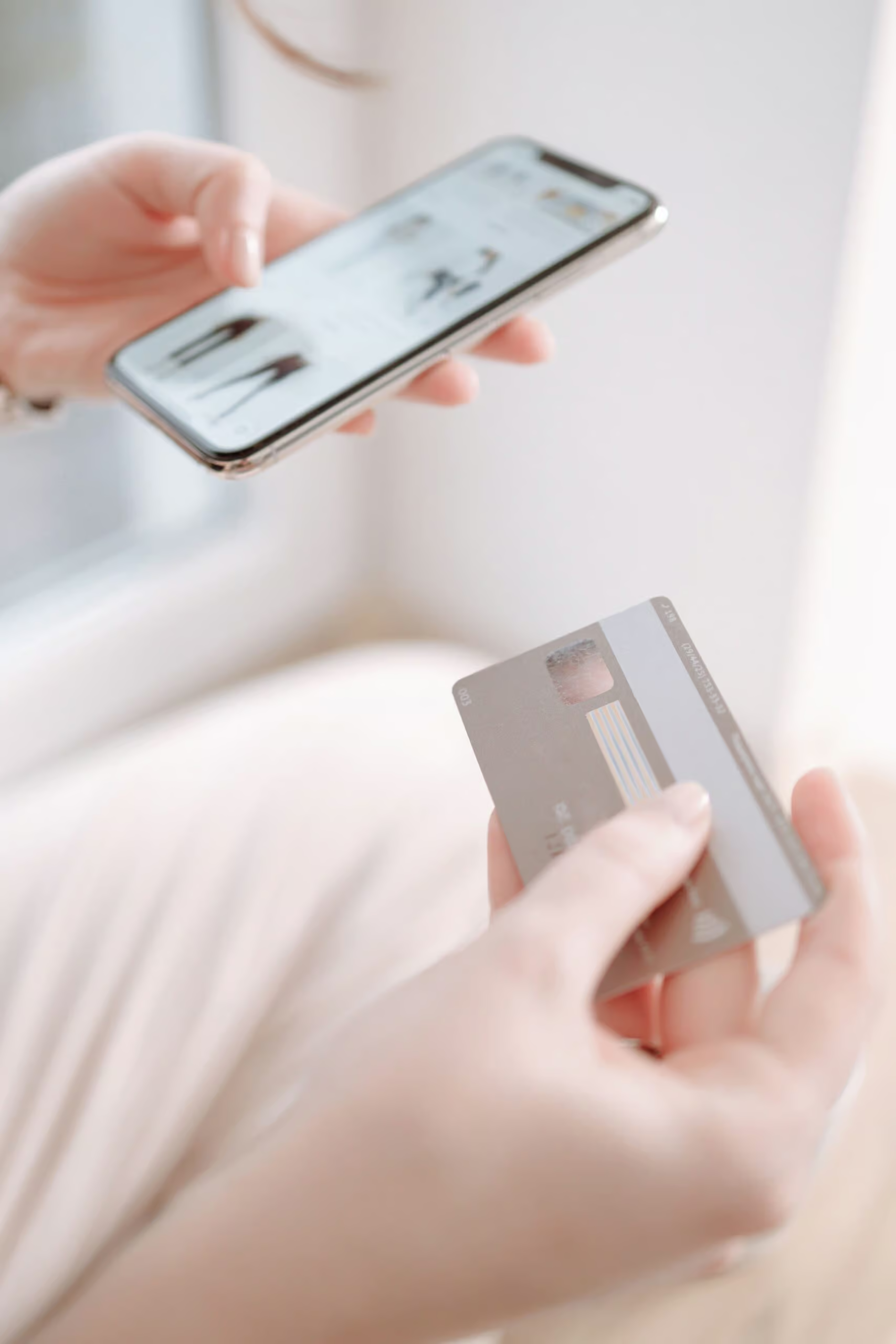
A prepaid card is a closed-value payment tool. You deposit funds into it first, then use that balance for online or in-store transactions. There’s no borrowing, no overdraft and usually no direct connection to your bank.
- You can only lose what you load: There’s no hidden overdraft or credit exposure
- No direct bank access: Even if card details are compromised, attackers typically can’t reach your main account
- Spending discipline is built in: You decide the limit upfront, which naturally reduces overspending risk
- Lower psychological pressure: Many users find it easier to treat prepaid funds as “set aside,” which changes how they spend
That combination makes prepaid cards feel controlled and contained, especially compared to credit cards, where spending can escalate quickly.
Where prepaid cards are most popular
Even as digital wallets gain market share, prepaid cards remain widely used in industries where spending control is a priority.
Common use cases include:
- Online shopping
- Streaming services and subscriptions
- Gaming platforms
- Online gambling
In the gambling sector, many players use prepaid cards to separate gambling funds from their everyday finances and set spending limits before they play. In Canada, payment options are often a key factor when choosing a casino. This has led to the growth of comparison resources. Casino.ca, for example, provides information on top-rated prepaid card casinos, helping Canadian players identify operators that accept prepaid deposits and compare their available features.
Where prepaid cards fall short
The problem is that safety isn’t just about limiting losses. It also includes usability, recovery and flexibility. This is where prepaid cards start to feel less complete. They are often one-directional. Depositing is easy, but withdrawals can be restricted or routed through other methods. That alone can create friction for users who want a smooth end-to-end payment experience.
There are also practical limits:
- Not always accepted for withdrawals
- Fewer dispute resolution options than banks
- Slower recovery if something goes wrong
- Less integration with modern fintech tools
Prepaid cards reduce certain risks while introducing operational limitations. That trade-off is important.
The broader financial shift behind prepaid cards
Prepaid cards don’t exist in isolation. They’re part of a much larger shift toward digital-first payments and alternative financial tools. The global prepaid and digital wallet market is expected to grow by 11.3% on an annual basis to reach US$2.13 trillion in 2026. The growth reflects a broader shift toward digital-first payments. Consumers increasingly use a mix of payment methods depending on convenience, speed and security needs.
Prepaid cards vs other payment options
Safety changes depending on what you compare prepaid cards against.
- Credit and debit cards are convenient, but they connect directly to your finances. That makes them powerful, but also higher risk if details are compromised.
- E-wallets add another layer of protection and tend to offer smoother withdrawals, but they require account setups and sometimes fees.
- Bank transfers are highly secure and regulated, but slower and less flexible.
- Cryptocurrency is on the opposite end. Fast and private, but volatile and less regulated.
Prepaid cards sit somewhere in the middle. They don’t offer the fastest experience or the broadest coverage, but they do create a clean separation between spending money and personal funds. For many users, that’s the deciding factor.
So, are prepaid cards the safest option?
It depends on what “safe” means in practice.
If safety means protecting your main bank account and limiting financial exposure, prepaid cards are one of the strongest tools available. They create a hard spending boundary that’s difficult to bypass. If safety includes things like smooth withdrawals, strong dispute systems and full transactional flexibility, they fall behind more integrated digital payment systems. They’re best understood as a control tool rather than a complete financial solution.
FAQs
In terms of limiting financial exposure, yes. Prepaid cards restrict losses to the loaded amount, while credit cards can introduce debt and higher fraud exposure if misused.
Not always. Some platforms allow it, but many require an alternative method like a bank transfer or digital wallet for cashing out funds.
Yes. Since they are not directly linked to your bank account, they add a layer of separation between online spending and personal finances.
They offer strict spending control, quick setup and reduced risk of overspending, which appeals to users who want tighter financial boundaries.