


This review of Pollo AI video generator takes a closer look at how the platform performs in real e-commerce advertising scenarios, where speed, consistency, and visual quality matter most. It explores how different AI models handle product-focused video generation and how the system supports workflows like text-to-video, image animation, and reference-based creation. The analysis below breaks down its key features and real-world performance to see whether it can truly deliver usable marketing results.
What is Pollo AI Video Generator?
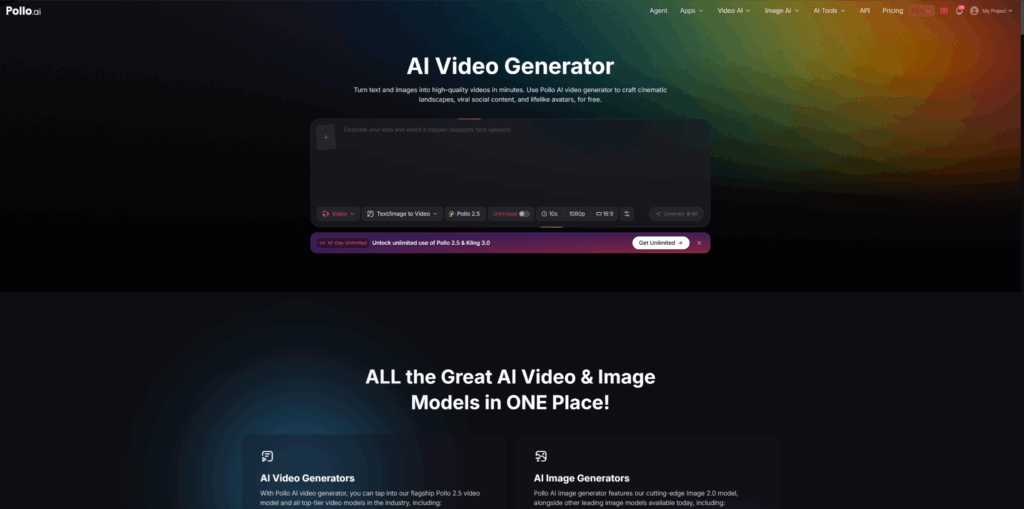
Pollo AI video generator is an AI-powered platform that generates videos from text prompts, images, or existing video inputs. Instead of traditional editing workflows, it relies on generative AI models to produce cinematic scenes, avatars, and motion-based visuals in a short time.
It operates as a multi-model ecosystem rather than a single model tool, integrating systems such as Veo 3, Kling AI, Hailuo AI, Pixverse AI, Runway, and others. Users can switch between models depending on output style, speed, or realism needs.
The platform also supports AI avatars, cross-scene character consistency, and synchronized audio effects, aiming to improve continuity in generated videos while keeping production flexible and automated.
Key Features of Pollo AI Video Generator

The Pollo AI video generator includes multiple core capabilities designed for flexible video creation.
It supports a multi-model system where users can select different AI engines like Pollo 2.5, Veo 3, Sora 2, Kling AI, and PixVerse AI. Each model produces different results in realism, speed, and style.
The platform also includes AI avatar generator, allowing a single image to be converted into a talking or expressive video character with facial motion and gestures. A key feature is cross-scene consistency, which helps maintain identity across frames.
It supports multiple input types:
- Text to video generation
- Image to video animation
- Video to video transformation
- Reference-based generation for consistency
Beyond generation, it also provides effects, templates, upscaling, and enhancement tools for post-processing.
How Does Pollo AI Video Generator Work?
Step 1: Choose a model
Users select a model such as Veo 3, Kling AI, Hailuo AI, Pixverse AI, or Pollo’s own models depending on desired output style.
Step 2: Enter prompt or upload input
Users input text, images, or existing videos. The system supports text-to-video, image-to-video, and video-to-video workflows.
Step 3: Adjust settings
Users can set aspect ratio, duration, style, and reference controls for better consistency.
Step 4: Generate output
The system processes the request and generates a video in a few minutes for download or further editing.
Performance and Capabilities
The following evaluation is based on a controlled set of real marketing generation tests across multiple scenarios, including product advertising, beauty content, food visuals, wearable products, and app interface-style scenes. The comparison covers HappyHorse, Kling v3 omni, Vidu Q3 Pro, and Seedance 2.0.
Overall Conclusion
Across all tested scenarios, the performance ranking remains stable:
Seedance 2.0 > HappyHorse > Kling v3 omni > Vidu Q3 Pro
Seedance 2.0 shows the strongest overall balance across text to video generation, image to video animation, video to video transformation, and reference-based generation for consistency, especially in maintaining multi-shot coherence and prompt adherence. HappyHorse ranks second and is the most commercially usable model in product-driven marketing scenarios. Kling v3 omni shows higher variance in execution quality despite relatively strong semantic understanding. Vidu Q3 Pro consistently underperforms across all generation methods.
A key aggregated result from testing shows:
- HappyHorse vs Kling v3 omni: 10:2:3
- Vidu Q3 Pro: 17/17 failures in tested cases
Across generation methods, Seedance 2.0 is the only model that maintains stable performance across all four paradigms. HappyHorse is strongest in image-to-video and reference-based workflows, while Kling is more unstable in video-to-video transformation and Vidu fails across all modes.
Food advertising (e.g. Posto Chingri shrimp dish)
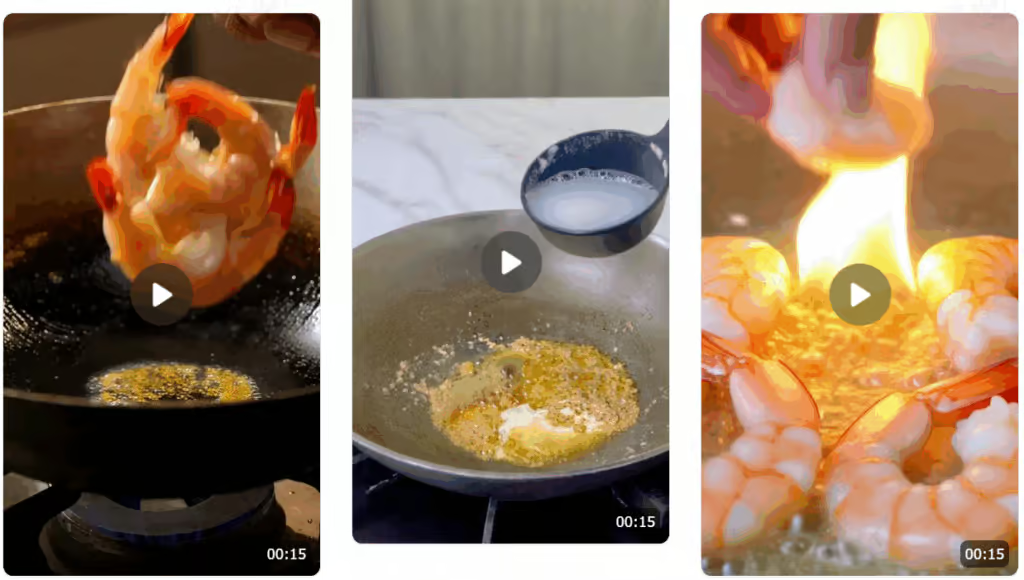
In food marketing scenarios, text to video generation is best handled by Seedance 2.0 and HappyHorse. Seedance 2.0 produces more structured multi-shot food storytelling with consistent composition and motion logic, while HappyHorse focuses more on lighting quality and product appetizing presentation, making it highly effective for short-form ads.
In image to video animation, HappyHorse performs particularly well by preserving dish identity while enhancing texture and lighting realism. Seedance 2.0 further improves temporal continuity across shots, making it more suitable for full ad sequences.
Kling v3 omni shows weaker control in both text-to-video and reference-based generation, often breaking ingredient logic or missing key food elements. Vidu Q3 Pro fails in all modes, frequently omitting core visual components.
Conclusion: Food advertising is dominated by Seedance 2.0 and HappyHorse.
Jewelry / product showcase (e.g. HZMAN pendant)
For static product advertising, especially jewelry, image to video animation and reference-based generation for consistency are critical. Seedance 2.0 leads in maintaining product identity across frames while adding cinematic motion.
HappyHorse performs second best and remains highly reliable in preserving product structure and brand logic, particularly in short 15-second ad-style outputs where lighting and framing stability matter most.
Kling v3 omni introduces instability in reference-based generation, with occasional product drift. Vidu Q3 Pro shows frequent visual artifacts and inconsistent object retention.
Conclusion: Seedance 2.0 leads overall, with HappyHorse as the most practical production alternative.
Wearable products / apparel (e.g. knee support)

In wearable and interaction-heavy scenarios, video to video transformation and reference-based generation for consistency become more important than static quality.
Seedance 2.0 performs best in maintaining structural coherence while handling motion transitions, making it more reliable for action-based product ads. HappyHorse provides usable outputs in controlled motion but struggles when physical interaction becomes complex.
Kling v3 omni shows instability in both text-to-video and video-to-video workflows, often breaking motion logic or missing key interaction steps. Vidu Q3 Pro fails across all generation types in this category.
SD 2.0 remains necessary for edge cases involving realistic human-object interaction.
Conclusion: Seedance 2.0 is clearly strongest, HappyHorse is second but limited in interaction-heavy workflows.
Beauty / skincare (e.g. face cream application)
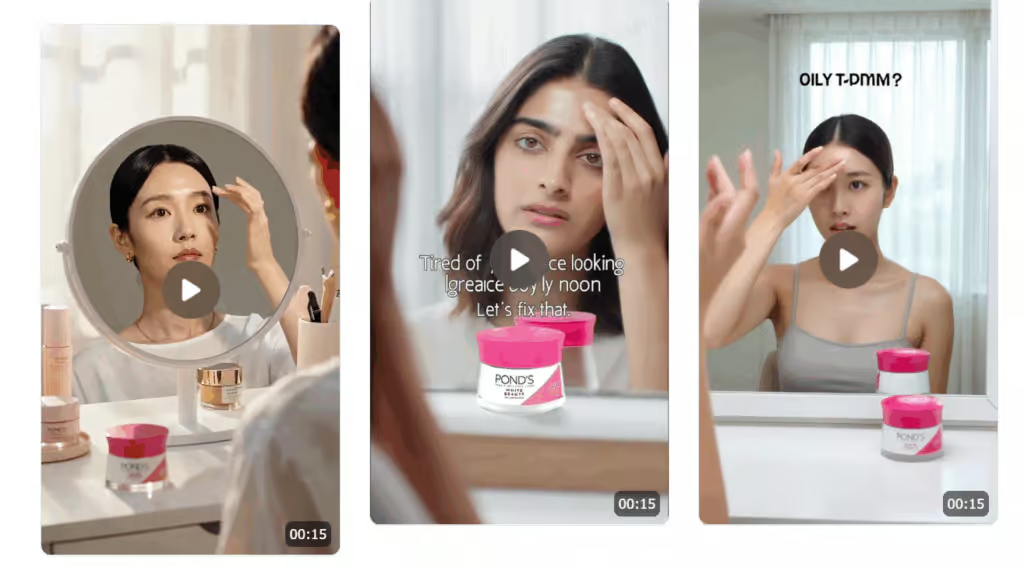
In beauty scenarios, all models struggle when video to video transformation and physical interaction are required.
Seedance 2.0 produces the most stable narrative framing in text to video generation, but still struggles with fine-grained hand interaction realism. HappyHorse performs slightly better in static composition and lighting, but fails in precise application actions.
Kling v3 omni and Vidu Q3 Pro both fail in maintaining consistent motion logic and product interaction across frames. In reference-based generation, none of the models fully preserve accurate hand-product dynamics.
Conclusion: Seedance 2.0 is best overall, but beauty interaction remains a universal weakness.
3C / App interface scenarios (e.g. school communication app)
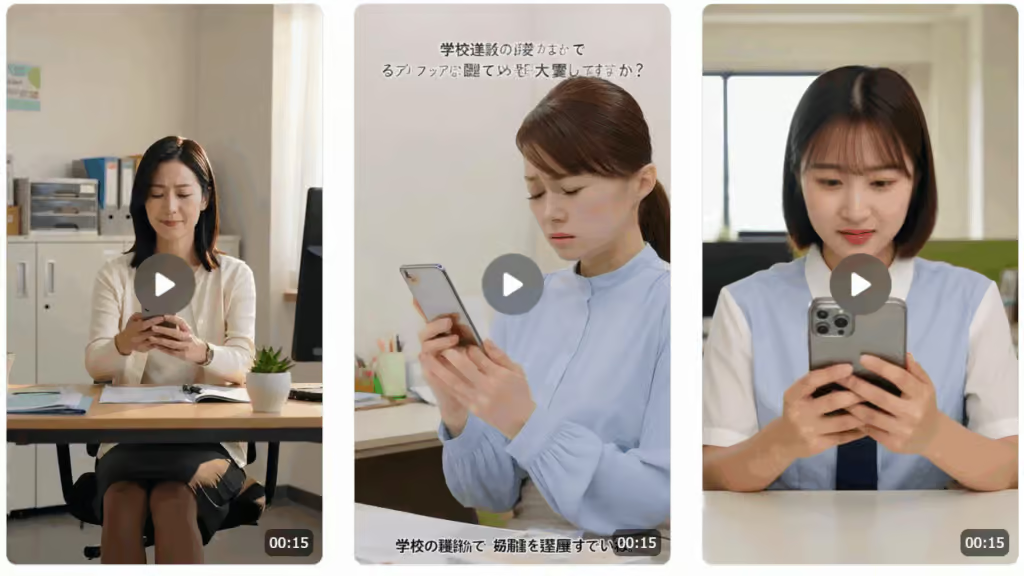
In UI-heavy scenarios, all models perform poorly across all four generation methods.
In text to video generation, interface structure is frequently misinterpreted. In image to video animation, UI elements break during motion. In video to video transformation, layouts degrade rapidly. In reference-based generation, text and UI consistency cannot be maintained by any model.
Seedance 2.0 performs slightly better in structural layout preservation, but still fails in readable text rendering. HappyHorse, Kling v3 omni, and Vidu Q3 Pro all show severe instability.
Conclusion: App/UI generation is not production-ready across all models.
Cross-scenario capability summary
Across all evaluated categories and generation methods:
Seedance 2.0
- Strongest overall across all four generation methods
- Best in text to video generation and multi-shot coherence
- Most stable in image-to-video and reference-based generation
- Most reliable in video-to-video transformation
HappyHorse
- Best commercial balance for product ads
- Strong in image-to-video and reference-based workflows
- Weak in complex motion and interaction-based video-to-video tasks
Kling v3 omni
- Strong semantic understanding in text-to-video generation
- Unstable execution in image and reference-based workflows
- Better suited for experimental video-to-video transformation
Vidu Q3 Pro
- Fails across all generation methods
- Weakest in consistency and motion logic
- Not suitable for production use
Final synthesis
In real production-oriented testing across food, jewelry, wearable products, skincare, and app interface scenarios, Seedance 2.0 demonstrates the strongest overall capability across all generation methods, especially in text to video generation and reference-based generation for consistency. HappyHorse ranks second and remains the most commercially practical option for product-focused advertising. Kling v3 omni provides limited creative flexibility but lacks stability in production workflows, while Vidu Q3 Pro is not suitable for marketing-grade video generation tasks.
Who Should Use Pollo AI Video Generator?
The Pollo AI video generator is designed for users who prioritize speed, automation, and scalable content creation over traditional manual editing workflows.
It is suitable for:
- Social media creators who need to quickly produce short-form videos for platforms like TikTok, Reels, and YouTube Shorts with minimal editing effort.
- Marketing teams that generate multiple ad variations and test different creative directions for campaigns and product promotions.
- Educators and presenters who want to turn concepts, scripts, or slides into simple visual explanations and engaging learning materials.
- Designers and filmmakers who use AI-generated videos as rapid prototypes or concept drafts before full-scale production.
- E-commerce sellers who create product-focused videos to showcase items, highlight features, and support conversion-driven advertising.
The platform also provides a free tier, making it easier for beginners to explore AI video generation without upfront cost or technical barriers.
Is Pollo AI Video Generator Worth it?
Pollo AI video generator is valuable for users who need fast, AI-driven video production across multiple models like Veo 3, Kling AI, and Pixverse AI.
It supports ads, cinematic scenes, avatars, and social content in one system, making it a flexible production tool rather than a traditional editor.
However, it is less suitable for users who need precise editing control or professional post-production workflows, as outputs depend heavily on prompt quality and model selection.
Overall, it works best as a rapid content generation platform rather than a replacement for professional editing software.