

For much of its history, real estate investing was built on experience, relationships, and instinct. A seasoned investor could walk through a neighborhood, recognize signs of growth, and make decisions based on years of pattern recognition. That intuition still matters. The difference today is that the strongest investors are combining that experience with better information.
According to Dada Saghdoshpey, the modern advantage comes from pairing instinct with disciplined analysis. The gut can still raise a question, but data helps determine whether that instinct is supported by reality. The investors who consistently perform well are not ignoring experience. They are using evidence to make that experience more precise.
Data-driven investing is not about collecting endless spreadsheets or allowing a model to make decisions on its own. It is about identifying the information that actually influences returns, analyzing it honestly, and using it throughout the investment process. Over time, that discipline improves results not because of a single perfect decision, but by reducing the small mistakes that quietly erode ROI.
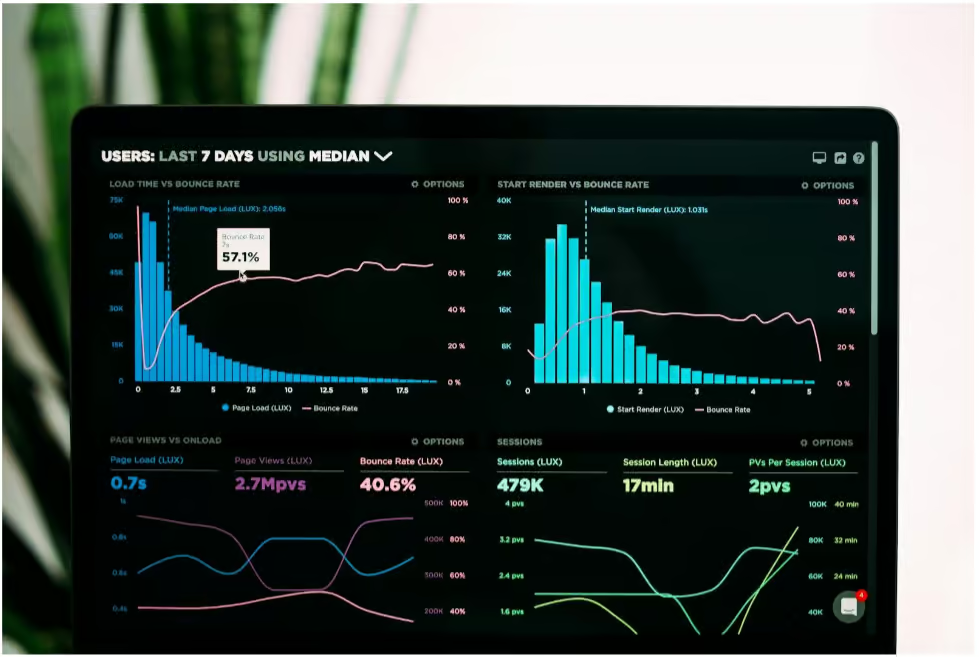
Better Data Creates Better Investment Decisions
The success of a real estate investment is often determined before the purchase is complete. The price paid, the assumptions made, and the risks identified during the acquisition process can shape returns for years to come.
Reliable information gives investors a stronger foundation. Comparable sales, rental trends, vacancy rates, employment growth, and neighborhood data all help create a clearer picture of whether an opportunity makes sense. An investor who relies only on optimistic projections or a persuasive sales pitch is making decisions with incomplete information.
Dada Saghdoshpey emphasizes that accurate data matters more than simply having more data. A large amount of information is not useful if the inputs are outdated, incomplete, or overly optimistic. Inflated rent assumptions, weak comparisons, or overlooked expenses can create financial models that appear detailed while still leading investors astray.
That is why grounding every projection in verifiable numbers is such an important discipline. When every assumption is supported by evidence, investors can identify problems earlier and avoid pursuing deals that only work under unrealistic conditions.
Better data also expands the range of opportunities investors can evaluate. Instead of focusing only on familiar neighborhoods, investors can compare markets based on consistent factors such as population growth, employment trends, affordability, and rental demand. That broader perspective helps prevent emotional decisions and allows investors to find opportunities that may not be obvious at first glance.
Focusing on the Metrics That Actually Matter
After a property is acquired, the role of data changes. The focus shifts from finding opportunities to improving performance.
Successful investors understand that not every number deserves equal attention. Some metrics create the appearance of progress but have little impact on long-term returns. The most valuable data points reveal how a property is truly performing: operating income, expenses, tenant retention, capital improvements, and the relationship between revenue growth and rising costs.
Tenant turnover is a good example. Many owners underestimate the true financial impact of losing a tenant. The cost is not limited to repairs or marketing. It includes lost rent, administrative time, leasing costs, and the possibility of extended vacancy.
This is where tracking the numbers that reveal hidden costs becomes especially valuable. Once investors understand the full impact of turnover, they often discover that maintaining strong tenant relationships and reducing unnecessary vacancies can significantly improve overall returns.
The same principle applies to property improvements. Not every renovation creates meaningful value. Some upgrades improve a property’s appeal and increase income, while others simply add costs without generating a measurable return.
Data allows investors to separate the two. By analyzing the impact of past improvements, owners can make better decisions about where to invest future capital and avoid spending money simply because an upgrade feels beneficial.
Financing decisions require the same level of discipline. Interest rates, debt structures, refinancing opportunities, and borrowing costs all influence returns. A strong property can still underperform if it is financed poorly. Investors who analyze multiple scenarios and understand how financing affects the long-term picture are better positioned to protect their investments.
Using Data to Understand Market Cycles
Real estate decisions are not only about individual properties. They are also about understanding broader market conditions.
Factors such as population growth, employment trends, new construction, and affordability levels can provide insight into where markets are heading. While data cannot predict the future perfectly, it can help investors make decisions with a stronger understanding of the probabilities.
Dada Saghdoshpey points out that data should not be viewed as a crystal ball. Markets change, unexpected events happen, and even the strongest models have limitations. The purpose of data is not to eliminate uncertainty. It is to help investors make better decisions despite uncertainty.
Over time, consistently making evidence-based decisions creates an advantage. An investor may still experience losses or make mistakes, but the mistakes are often smaller and easier to correct than those driven primarily by emotion.
Data also helps investors manage some of the psychological challenges that come with real estate. It is common for owners to become attached to a property, hold onto an underperforming asset because of what they paid for it, or assume a previous trend will continue indefinitely.
A commitment to evidence creates accountability. It encourages investors to ask whether a property is still performing as expected and whether capital could be used more effectively elsewhere.
The Mistakes Data Helps Investors Avoid
One of the biggest benefits of a data-driven approach is that it exposes mistakes before they become expensive.
A common example is focusing too heavily on the original purchase price. Investors sometimes keep underperforming properties because selling feels like admitting failure. But the more important question is whether the property is still the best use of that capital today.
Data provides a clearer perspective. It shifts the focus from what happened in the past to the opportunities that exist going forward.
Another common mistake is underestimating long-term expenses. Some costs are predictable, while others occur less frequently but have a major financial impact. Roof replacements, major systems, and large repairs may not happen every year, but they are part of owning real estate.
Investors who fail to account for those expenses often create unrealistic expectations about returns. Strong analysis includes the full lifecycle cost of a property, not just the expenses that appear on a monthly statement.
Data also helps protect against overly optimistic assumptions. A market experiencing rapid growth today may not continue at the same pace forever. Building projections around multiple scenarios allows investors to prepare for different outcomes rather than relying on the assumption that current conditions will last indefinitely.
The value of data is not that it removes every risk. It makes it harder to ignore risks that are already visible.
Turning Data Into a Long-Term Advantage
For Dada Saghdoshpey, data-driven investing is not about buying the latest technology or creating complicated systems. It is about developing a consistent habit of asking better questions.
Before making an investment decision, investors should understand what the evidence shows. After making a decision, they should compare the results against their expectations and learn from the difference.
That feedback loop is where improvement happens. Each investment decision provides new information, and each lesson strengthens future decisions. Over time, experience becomes more valuable because actual results rather than assumptions support it.
The best investors do not choose between instinct and analysis. They combine them. Experience helps identify opportunities, while data helps determine whether those opportunities are worth pursuing.
Maximizing ROI in real estate is rarely about finding one extraordinary deal. It is about making a series of thoughtful decisions, avoiding unnecessary mistakes, and improving the process over time.
That combination of judgment and evidence is what allows investors to build portfolios that perform across changing markets. For Dada Saghdoshpey, the future of real estate investing belongs to those who understand that data does not replace expertise. It strengthens it.