

Receipts are easy to overlook. You check the total, put the paper in your wallet and probably forget about it until you need to return something. For most purchases, the receipt has traditionally been little more than proof that you paid.
That is starting to change. Some platforms now let you earn money for scanning receipts from eligible purchases. Sites like BrandBee are part of a wider shift that is giving receipts more uses after you leave the store, from rewards to keeping better track of what you buy.
Your receipt is becoming part of your financial record
The move away from paper receipts makes sense when so much of your financial life is already digital. A digital receipt is easier to store, search and find again when you need it. You do not have to remember which drawer you put it in three months ago.
There is also growing interest in having this information available through financial apps. Among U.S. consumers, 48% prefer digital receipts through banking apps. However, 60% say avoiding disclosure of their shopping data to stores is an important factor.
That suggests convenience is only part of the picture. You want useful records of your purchases, but you might also want more say over who can access information about what you buy.
Receipts can help you see where your money is going
Keeping receipts can also make everyday spending easier to understand, especially when prices are changing.
The U.S. Bureau of Labor Statistics found that food prices were 3.0% higher in July 2026 than they had been a year earlier, while energy prices were up 14.7%. If your usual grocery trip suddenly feels more expensive, checking your receipts can give you a better idea of where the difference is coming from.
Maybe the same products have become more expensive. Maybe you are buying a few more things each week. Or perhaps several small purchases are making a bigger difference than you realized.
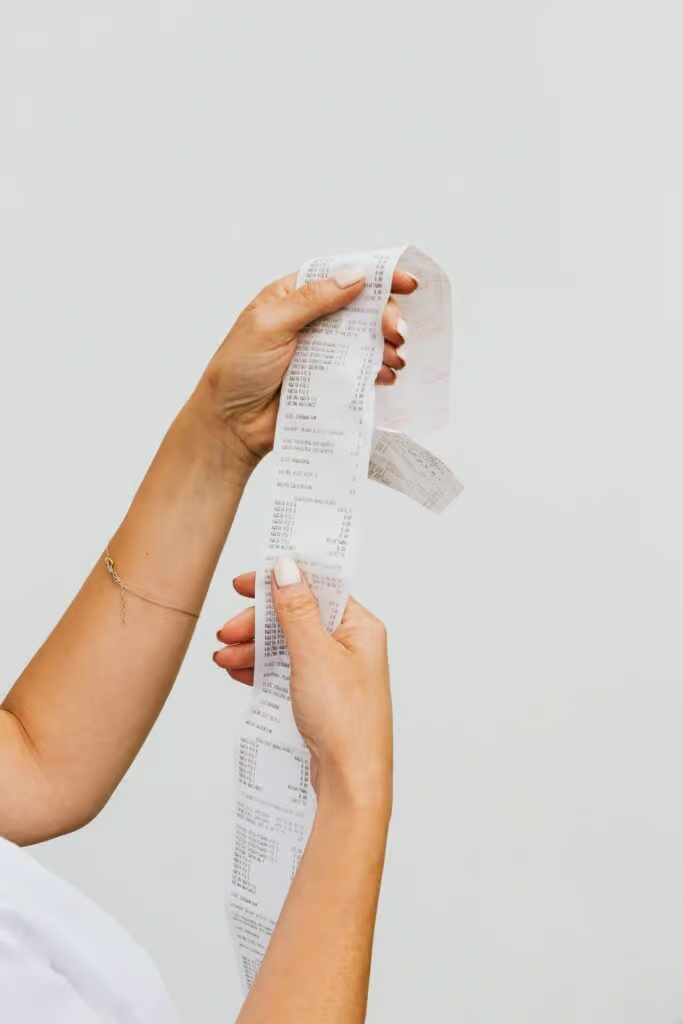
You don’t need to track every cent to get something useful from your receipts. Looking back over a few weeks can show you where your money is going and where you might be able to make it stretch a little further.
Why businesses care about your receipts
A receipt tells you how much you spent, but it can contain plenty of other information too. A receipt shows the products and brands you bought. It also shows where and when you made the purchase.
Businesses can use those details to get a clearer picture of shopping habits. For example, they might look at which products people are choosing or whether certain offers are changing what they buy.
That also gives you something to think about when it comes to privacy. A receipt can reveal more about your shopping habits than you might initially expect. Before uploading one to an app, check what information the service collects and what it does with it.
Receipts are becoming connected to rewards
Some platforms let you submit receipts from qualifying purchases and receive rewards in return. BrandBee, for example, has a receipt rewards feature that allows users to submit eligible receipts.
The appeal is fairly straightforward. You have already made the purchase, so a rewards program can give you another way to get some value from the transaction.
That doesn’t mean every receipt will qualify, and it is not a good reason to buy something you do not need. The most useful approach is to treat rewards as an extra rather than a reason to change your usual spending.
How to get more from your receipts
You can get more use from your receipts without turning them into a full-time budgeting project.
Keep digital receipts somewhere you can easily find them. Check them against your bank transactions if you are trying to understand where your money is going. For larger purchases, hold onto the receipt in case you need it for a return or warranty claim.
If you use a receipt-reward platform, look for offers that match things you would normally buy. There is little benefit in spending extra just to collect a reward.
It is also worth taking a quick look at the privacy policy before uploading receipts. Knowing what you are sharing can be just as important as knowing what you get in return.
FAQs
Yes. Looking through your receipts can highlight spending habits, unnecessary purchases and areas where you could potentially cut back.
They are easier to store and search than paper receipts, and they can be integrated with banking, shopping and rewards services.
Some receipt-reward apps give you something back when you submit a qualifying purchase. How much you receive, and which receipts are accepted, varies from one platform to another.
Depending on the purchase, your receipt might show the retailer, items bought, prices, date, time and total cost.
It can give businesses a better understanding of what people are buying and how shopping habits change. That information might also help them assess products, promotions and other offers.
There is no one answer for every app. Before uploading a receipt, have a look at the platform’s privacy policy and check what it collects, why it needs the information and how it handles it.