
Most facility managers don’t think much about their sewage pumps — until something goes wrong. And by the time something goes wrong, it’s rarely just a maintenance issue. It’s a flooded basement, a tenant on the phone, an emergency repair invoice nobody budgeted for, and an insurance conversation that doesn’t go the way you hoped.
Across the United States, aging infrastructure and increasingly unpredictable weather are making this more common. Flash floods that used to be rare are becoming regular seasonal events. When they hit, the buildings that hold up are the ones where someone made a thoughtful decision about drainage infrastructure years earlier.
This guide helps property managers and investors move beyond price-tag selection — before the next storm hits.
What a Pump Failure Actually Costs
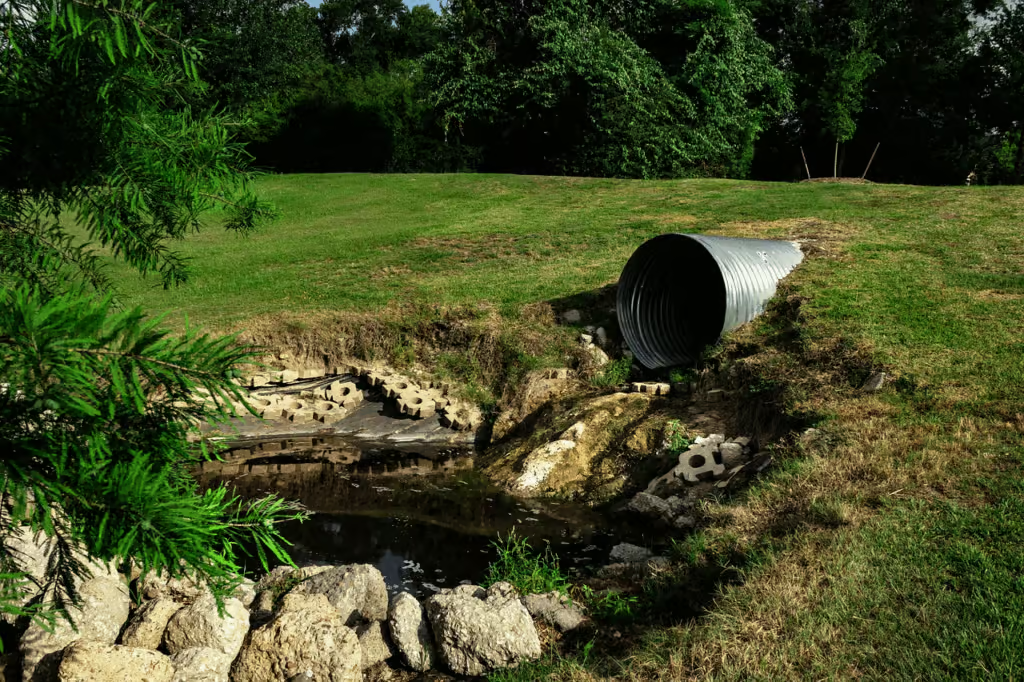
Most facility managers don’t see the full cost of a pump failure until they’re already in the middle of one. The sticker price of a better pump is the number that stops the conversation — but the costs that follow a failure are the ones that actually matter:
- Emergency repair and remediation: Off-hours callouts carry premium labor rates. Any resulting water damage — mold, structural inspection, tenant space remediation — compounds quickly and rarely stays within the original maintenance budget.
- Operational disruption: Every day offline has a dollar value. Warehouse logistics delayed, retail tenants invoking lease clauses, healthcare facilities managing compliance exposure. The pump is a small line item; the downtime it causes is not.
- Long-term asset value: A building with a documented history of drainage failures or flood-related claims is a harder asset to insure, finance, and sell. Infrastructure reliability shows up in underwriting and buyer conversations whether you plan for it or not.
Why the Material Decision Matters More Than the Price Tag
The single most important variable in long-term submersible sewage pump performance isn’t horsepower or brand — it’s the material the pump is built from and how well it holds up against your wastewater chemistry.
Standard cast iron pumps work reasonably well in clean, low-chemical residential settings. In commercial environments, the chemistry is different. Detergents run alkaline. Kitchen waste is acidic and greasy. Healthcare facilities use chlorine-based disinfectants. A cast iron pump in that kind of environment is aging every day.
Stainless steel changes that equation. Grade 304 handles most commercial environments well. Grade 316 is the right choice when discharge is high in chlorides or concentrated chemicals: coastal properties, healthcare facilities, food processing operations.
| Category | Stainless Steel | Cast Iron |
| Corrosion Resistance | Excellent — withstands acids, alkalis, chlorides | Moderate — prone to rust in wet/chemical environments |
| Service Life | 15–25+ years with minimal maintenance | 5–10 years; accelerated by corrosive wastewater |
| Maintenance Frequency | Low — smooth surface resists scaling and buildup | High — requires rust treatment and recoating |
| Hygiene (Healthcare/Food) | Non-porous, easy to sanitize, pathogen-resistant | Porous surface may harbor bacteria over time |
| Recyclability / ESG | 100% recyclable, supports green certification | Recyclable but shorter lifecycle generates more waste |
| 10-Year TCO | Lower: fewer replacements and near-zero downtime | Higher: frequent repairs erode initial cost savings |
A stainless steel submersible pump may cost 20 to 40 percent more upfront. If it lasts 15 to 25 years instead of 5 to 10, requires fewer emergency callouts, and generates fewer insurance events, the 10-year cost is lower — often substantially.
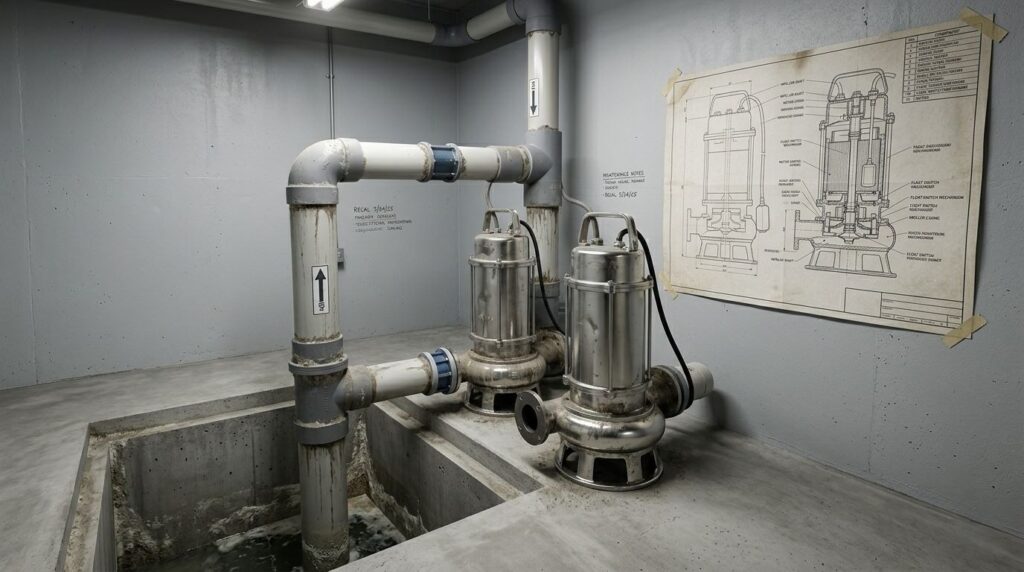
How to Choose the Right Submersible Sewage Pump for Your Property
The wrong starting question is “what horsepower do I need.” The right question is: what is this pump actually going to encounter day to day, and what happens to your operations if it fails?
Start with the nature of your wastewater
If your facility generates wastewater with large solid particles, fibers, or debris — industrial sites, logistics operations, food processing — a vortex pump is the right design. The impeller doesn’t contact solids directly, which reduces clogging and wear over time.
If your property is a shopping mall, hotel, or multi-tenant office building, a grinder pump is the better fit. The cutting mechanism processes wet wipes, sanitary products, and food waste before they travel downstream, protecting both the pump and the discharge lines.
If your wastewater is primarily liquid with minimal solids — a smaller retail space, a light-use office building — a standard submersible sewage pump handles the load efficiently without added complexity.
Match the configuration to your risk exposure
Single-phase pumps are well-suited to smaller commercial properties and lighter daily loads: a neighborhood retail unit, a small office building, a modest food service operation. They’re easier to install, cost-effective for the application, and when properly specified in stainless steel, highly durable.
Three-phase pumps are the right choice when the load is sustained, heavy, or both. Multi-tenant commercial buildings, large hospitality operations, industrial facilities, and any property with a meaningful flood risk profile belong in this category. Three-phase motors handle continuous high-demand operation more efficiently and with less thermal stress — which translates directly to longer service life in demanding environments.
For flood-prone or high-risk assets, higher-horsepower three-phase configurations are the appropriate specification — built for the events that actually test your infrastructure.
Motor efficiency and sealing technology
IE3 or IE4 rated motors reduce energy draw by 15 to 30 percent compared to standard alternatives — a difference that typically recovers the efficiency premium within 12 to 18 months at commercial scale. On sealing, dual mechanical seals in an oil-filled chamber give you an early warning when the seal begins to fail, before water reaches the motor windings. That warning is the difference between a routine service call and a full motor replacement.
What This Looks Like Across Different Property Types
Every property type has a different failure profile. Two categories where the specification decision carries the most consequence:
Healthcare Facilities and Hospitals
This is the most demanding environment in commercial real estate, and the one where getting the pump wrong creates problems well beyond the mechanical. Chlorine-based disinfectants are aggressive toward standard materials. Hygiene standards are non-negotiable and subject to regulatory oversight. A drainage failure in a healthcare setting puts patient safety, compliance standing, and facility reputation at risk simultaneously. Grade 316 stainless steel, hermetically sealed motors, and redundant pump configurations are not premium options here — they’re the appropriate baseline for the environment.
Industrial Facilities, Logistics Parks, and Wastewater Treatment
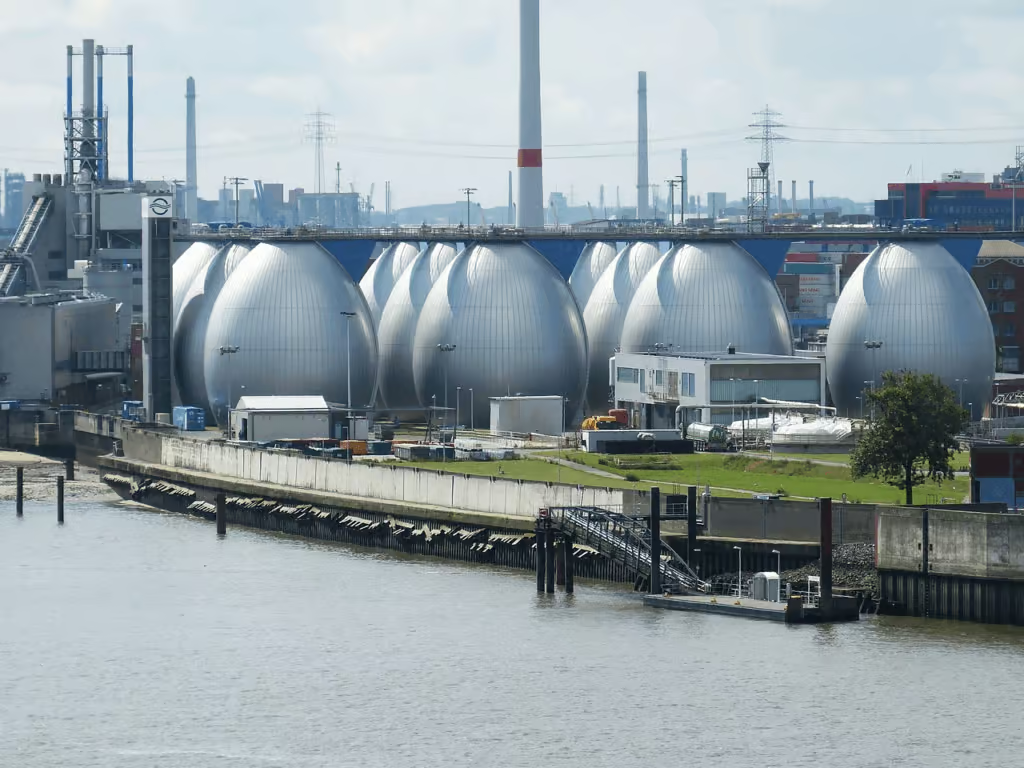
The challenge here is intermittent but extreme: high-volume surges, chemically aggressive discharge, and solid waste profiles that overwhelm standard commercial pumps quickly. Heavy-duty vortex pumps with reinforced stainless steel casings handle this well. For large warehouse footprints in weather-exposed markets, or municipal lift station and wastewater treatment applications where continuous operation is non-negotiable, higher-horsepower three-phase sewage pump configurations provide the sustained discharge capacity that protects operations when it counts most.
For other property types — office buildings, hotels, shopping centers — the same principles apply: match the sewage pump material and design to the specific wastewater chemistry and operational risk of that environment. The consequence of failure is the right lens for every selection decision.
The Decision Looks Small. The Impact Isn’t.
It’s easy to treat a sewage pump as a commodity purchase. For a long time, many properties got away with that. The margin for error has narrowed. It is better to have it and not need it, than to need it and not have it.
More frequent extreme weather, rising insurance premiums, and more rigorous buyer due diligence have changed the calculus. The right submersible sewage pump means property managers aren’t fielding emergency calls when a storm hits. Building owners see stable NOI, fewer surprise expenses, and a property that holds its value through inspections, renewals, and acquisitions. A quality stainless steel submersible pump won’t make the news. That’s exactly the point.