

Mediterranean property portfolios spanning multiple Southern European markets outperform single-country holdings by capturing divergent price cycles, rental demand patterns, and buyer competition dynamics. Sicily’s property market averages €1,162 per square meter while Portugal’s Algarve commands €4,400 per square meter, but raw price differentials obscure the more significant distinction: these markets attract fundamentally different buyer pools competing for different property types.
Nick Houwen, co-founder of Casa Vista Real Estate LDA, has developed holdings in both regions. His portfolio includes Casadisiu luxury apartments in Palermo and residential development projects in Portugal’s Algarve.
What Makes Mediterranean Diversification Effective in 2025?
Geographic diversification reduces regulatory exposure, but the deeper advantage lies in counter-cyclical demand patterns. British and Irish buyers dominate Algarve transactions at 60% combined market share, making Portuguese coastal property sensitive to Sterling fluctuations and UK economic sentiment. Sicily draws predominantly from Germany, France, and domestic Italian buyers, creating exposure to different economic drivers.
Sicily recorded a 10.8% increase in tourist arrivals in 2023, with foreign visitors rising 24.8%. Portugal’s Algarve saw property prices climb 15.3% during 2024 and an additional 9.3% through August 2025, according to Portuguese National Statistics Institute data.
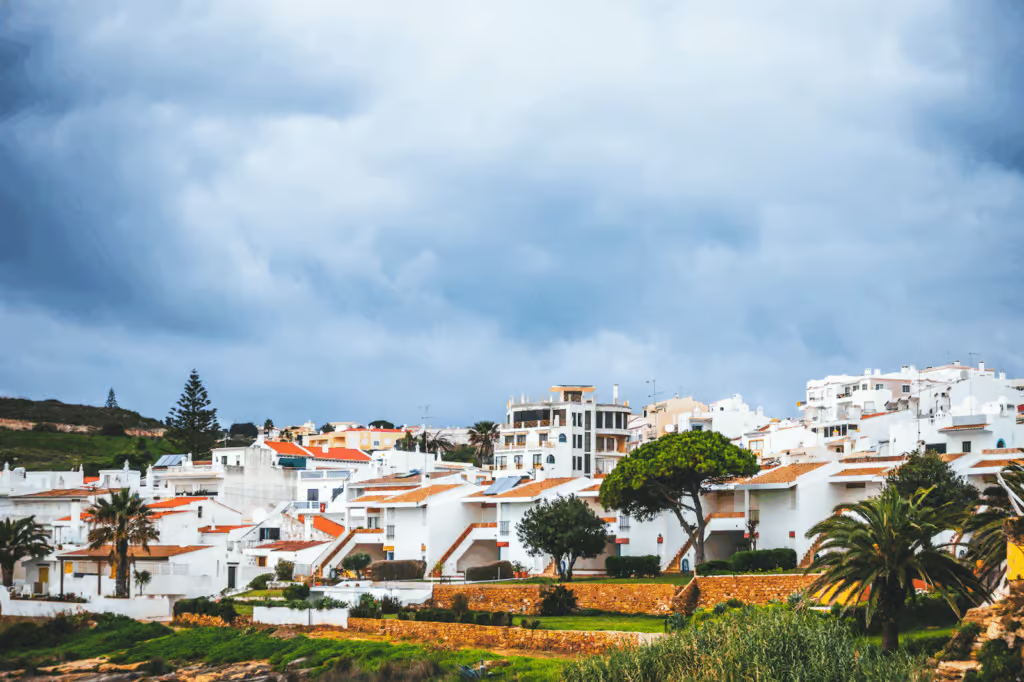
Real estate investor Nick Houwen identifies the rationale for multi-market exposure. “Sicily offers entry points that allow investors to build positions in an appreciating market,” he observes. “The Algarve delivers proven rental demand and established international buyer networks. Combining both creates portfolio resilience.”
How Do Sicily and Algarve Price Points Compare?
Sicily Market Entry
Palermo recorded 20% higher sales volumes with 3% price growth in recent quarters. City apartments in Palermo, Catania, and Syracuse average €1,162 per square meter. Short-term holiday rentals in Sicilian tourist destinations yield 10-20% gross annually, compared to 5% for standard residential properties.
Key advantages include entry below €200,000, higher gross yields, renovation incentives through 50% Italian tax deductions, and lower buyer competition outside peak summer.
Algarve Market Entry
Average price per square meter reached €4,400 in 2025, with villas at €4,650. Quinta do Lago (with luxury hotels like Conrad Algarve), Vale do Lobo, and Almancil command premium pricing, with luxury properties exceeding €12,300 per square meter.
Key advantages include proven 5% yields with strong occupancy, resale liquidity under 45 days for correctly priced properties, and an established English-language property management infrastructure.
Why Did Nick Houwen Choose Both Palermo and Ferragudo?
Houwen’s cross-border real estate investment approach centers on identifying markets at different maturity stages, but execution reveals a critical insight: management complexity scales non-linearly across borders. Operating in two EU countries requires separate accounting relationships, distinct rental licensing regimes, and duplicate administrative overhead.
His Casadisiu.com project targets Palermo’s luxury short-term rental market, while Casa Vista’s Ferragudo development serves Northern European buyers seeking turnkey properties.
Palermo’s historic Kalsa district attracts renovation investment and boutique hospitality development. Average Italian property prices range between €2,200 and €3,200 per square meter in major cities, with Sicily offering entry points below these thresholds. However, Italy’s 50% renovation tax deduction requires meticulous documentation and often takes 18-24 months to process.
Casa Vista Real Estate LDA has undertaken a 30-townhouse development in Ferragudo, each offering 181 square meters of living space plus a 91-square-meter basement. Recent analysis highlights Ferragudo’s strategic position in Algarve’s sales surge within the broader market context.
“The Golden Triangle commands premium prices due to its well-established reputation and limited supply,” Houwen explains. “Ferragudo offers new constructions at 40-50% lower prices. Palermo provides Mediterranean luxury at a fraction of the cost of the French Riviera or Costa del Sol.”
What Rental Yields Can Investors Expect Across Both Markets?
Headline yield figures mask operational realities. Sicily’s 10-20% gross yields require active guest management and seasonal staff. Net yields after management fees (20-25% of revenue), cleaning, maintenance, and vacancy periods compress to 6-10%.
Algarve’s 5% gross yields reflect a more passive ownership model. Established property management companies charge 15-20% of rental income but handle all operations. Portimão achieves 5.9% and Loulé reaches 5.1%.
Sicily’s top rental locations include Palermo and Catania for year-round demand from students and professionals. Cefalù, Taormina, and Syracuse are popular for tourist rentals. Twenty percent of Algarve buyers purchase specifically for rental income, showing a mature investor infrastructure.
How Do Tax Frameworks Differ for International Investors?
Italian Tax Considerations
Investors benefit from renovation bonuses providing 50% tax deductions, plus Ecobonus deductions up to 65% for energy upgrades. Italy’s flat rental tax allows landlords to pay 21% rather than progressive rates. Crucially, non-resident landlords cannot offset Italian property losses against home country income. Italy imposes a 26% capital gains tax on properties sold within five years.
Portuguese Tax Considerations
Portugal modified its Non-Habitual Resident tax regime in 2025, replacing it with NHR 2.0. Exit taxation favors longer holds: Portugal charges no capital gains on primary residences held over 24 months.
Both countries require tax identification numbers before purchasing: codice fiscale for Italy, NIF for Portugal. Experts advise preparing for Algarve’s 2026 luxury property wave by completing administrative steps months before properties appear on the market.
What Infrastructure Supports Each Market’s Growth?
Sicily benefits from €15 billion in Italian government road investments connecting Palermo, Agrigento, and Catania. Palermo-Catania railway modernization will reduce travel times by one-third. Catania Airport recorded a 60% surge in flight searches since 2019. However, Sicily lacks direct transatlantic flights, limiting American buyer access.
Algarve infrastructure includes Faro Airport’s European connections and seasonal United Airlines Newark service. British buyers account for 43% of foreign purchases, Irish 17%. American buyer presence grew 36% year-over-year, driven by direct flight availability.
Sicily’s ISMETT 2 hospital expands specialized medical services, addressing a gap that previously deterred retirement buyers.
Where Should Mediterranean Portfolio Builders Start?
Sequencing matters more than simultaneous entry. Investors with €200,000 to €400,000 should establish Sicily positions first, capturing appreciation while building operational knowledge. Algarve entry requires larger capital but delivers established systems and predictable cash flows.
Those with €600,000 or more can diversify immediately but should weight initial allocation toward Sicily (60-70%) to capture upside, rebalancing toward Algarve as positions appreciate.
Nick Houwen shares Portugal property insights and emphasizes preparation over timing. “The difference between securing your ideal property and missing it entirely often comes down to having tax documentation and legal teams ready when listings go live,” he states.
Sicily offers a value-oriented entry with upside from renovations and higher yield potential, offset by management intensity. Algarve delivers institutional-grade rental infrastructure and faster exit liquidity. Combined exposure captures growth across different market cycles while hedging single-country concentration risk.