

The rapid pace of technological advancement has remade the way blockchain networks are funded. Previously criticized for its power usage, Bitcoin mining has since become a model of innovation and efficiency.
Nathan Nichols, whose career spans digital assets, energy strategy, and private equity, sees this shift as a crucial turning point. As the world’s first and most decentralized blockchain continues to grow, its nascent mining technologies are building the groundwork for the next cycle of expansion throughout the digital economy.
Efficiency Through Smarter Hardware
The development of mining hardware has always been integral to Bitcoin’s continued progress. Advances in ASIC chip design have reduced energy usage by as much as 50% since 2020, positively impacting scalability and reducing operational costs for miners.
This advancement not only increases profitability but also makes blockchain more resilient by lowering the threshold for new entrants. Nathan sees this harmony between power efficiency and network security as a testament to how technology can drive sustainability even in the most energy-hungry industries.
Mining Adopts Renewable Energy
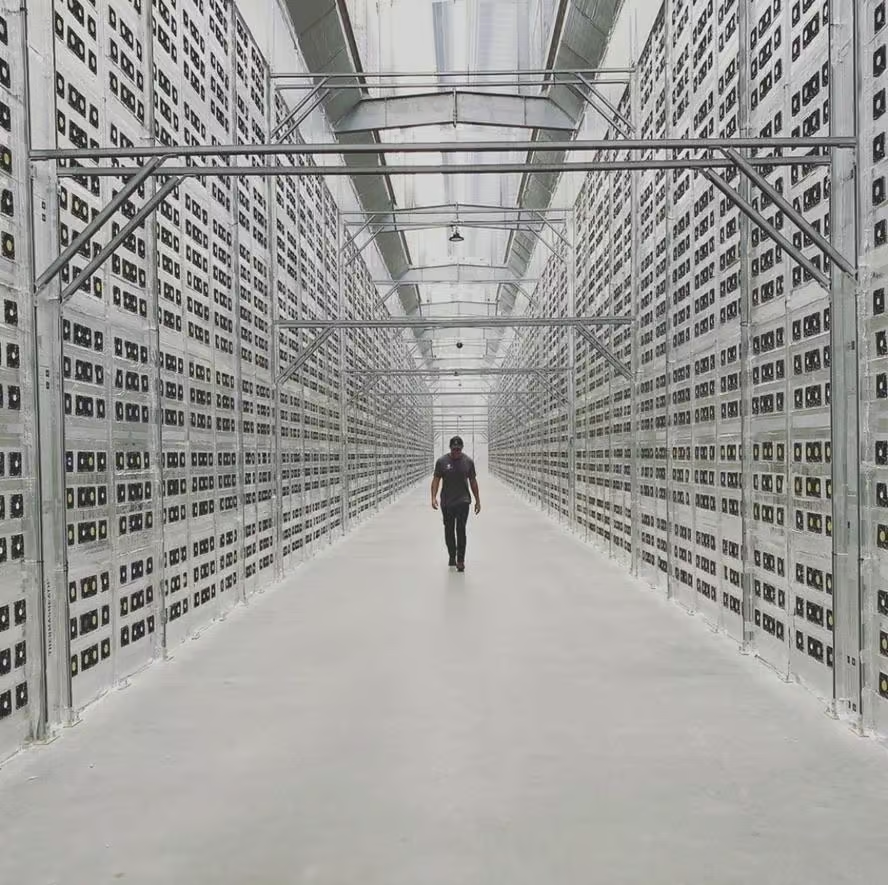
Even as renewable energy gains momentum worldwide, Bitcoin miners are maintaining the same pace. Operations fueled by wind, hydro, and solar power now represent an increasing share of the network’s hashrate.
The use of these sources has lowered energy expenses by 20 to 30 percent and aligned mining with overall environmental objectives. This intersection of clean energy and computation has attracted new institutional investment, reframing Bitcoin mining as a progressive sector rather than a contentious issue.
Nathan’s emphasis on long-term energy innovation reflects this paradigm. He has consistently advocated for renewable integration as a driving force behind profitability and responsibility.
Cooling the Future
While energy efficiency remains crucial, performance gains extend beyond electrical consumption. Next-generation cooling systems, such as liquid immersion technology, are increasing hashrate by at least 15% and extending the longevity of mining equipment.
These systems keep equipment at optimal temperatures even under high-load conditions, improving their reliability while reducing maintenance requirements. The outcome is a safer, more stable Bitcoin network that can accommodate blockchain’s expanding global presence. For investors and engineers, this combination of hardware technology and environmental consciousness marks a significant turning point for the industry.
Diversification After Division
The Bitcoin halving in 2024 was a watershed moment for miners, leading to the exploration of dual-use infrastructure for both blockchain verification and AI computation. By deploying high-performance computing for mixed workloads, mining centers are evolving towards new revenue streams while fortifying Bitcoin’s security underpinning.
Nathan sees the trend as an expansion of blockchain’s versatility—a show of how development can remain in a growth phase even as the economic environment changes. This trend is slowly transforming mining camps into general-purpose digital infrastructure platforms that support a range of high-value technologies.
Toward a More Stable Global Market
Evolving regulations in key markets such as the United States and the European Union also contribute to a more predictable operating environment. Compliance frameworks and energy efficiency standards have become integral to sustainable expansion, paving the way for Bitcoin to reach $10 trillion in market value by 2030. With continuing policy support, technological sophistication, and environmental adaptation, Bitcoin’s future over the next decade is promising.As innovation continues to redefine mining and energy systems alike, Nathan Nichols views this development as something greater than an industrial evolution—it’s a reinvention of how blockchain links technological aspiration with economic possibility. Bitcoin mining, once considered an energy-hungry activity, is now fueling the fulfillment of blockchain’s digital destiny.