
Real-time economic data has become a vital edge for modern forex traders. Instant releases, mobile alerts and fintech tools let you react faster, understand market shifts sooner and make decisions with greater confidence. Speed, awareness and clear information now shape the way competitive traders navigate volatility.
Real-time economic information shapes the rhythm of the currency markets in ways traders feel every day. You see it in the sudden shifts around inflation releases, the tension before Federal Reserve meetings, and the way liquidity changes when numbers arrive from agencies like the Bureau of Labor Statistics. Traders who move early often make cleaner decisions because timely information lets them frame risk before the rest of the market reacts. The environment rewards speed, clarity and a willingness to follow the numbers instead of chasing guesses. That is why real-time data sits at the centre of modern forex trading if you want to stay on the right side of volatility.
Real-Time Indicators and Intraday Currency Movement
When you follow live updates on CPI, PCE or labour market conditions, you are watching the same datasets that drive institutional flows. Every month the Bureau of Labor Statistics releases nonfarm payrolls at exactly 8:30 a.m. Eastern Time, and currency pairs like EURUSD and USDJPY often jump twenty to forty pips in the first few minutes after the release.
Those moves come from shifts in expectations around interest rates and economic strength. This kind of movement gives you an opportunity to position yourself ahead of slower traders because you are acting on clear information rather than waiting for commentators to explain the news hours later.
Central bank decisions can create the same effect. When the Federal Reserve raised rates by seventy-five basis points in mid-2022, the dollar index strengthened rapidly because markets recalibrated future rate paths. Traders who monitored the statement and press briefing in real time had an advantage because they reacted directly to the tone of the announcement instead of relying on summaries.
You see this play out even more now that mobile feeds and platform alerts deliver updates within seconds. A reliable trading broker supports situations like these by supplying steady access to fast feeds and responsive execution, which helps you stay competitive during sharp intraday moves.
Fintech Habits That Shape Trader Awareness
You see constant shifts in investor behaviour, especially as digital tools shape the way people make decisions. When you look at how fintech habits are evolving, you notice how often dashboards, alerts and market apps guide the flow of information.
The same pattern appears in currency trading, where economic data becomes a signal you can act on instead of background noise. Building these habits into your routine puts you in a stronger position than traders who only check the numbers after the market has already reacted.
Retail trading changed once platforms began offering integrated news feeds and economic calendars. MetaTrader 4, widely used since the mid-2000s, included a built-in news ticker that pulled updates from Dow Jones Newswires. TradingView added an economic calendar in 2019, letting you track high-impact releases like CPI or nonfarm payrolls without switching websites. When the Bank of Japan adjusted its yield curve control policy in late 2023, the yen reacted sharply. Traders using fintech tools moved faster because they sensed the policy shift’s effect on liquidity and sentiment. That speed becomes a competitive edge when markets move within seconds.
Fintech habits also help you connect with broader macro information. Many traders check purchasing manager indexes from S&P Global or inflation breakdowns from Eurostat because the data arrives in clean, digestible formats. When you understand how those numbers are constructed, volatility during major announcements feels less intimidating, and you stay aligned with the way modern traders rely on technology to stay informed.

Economic Releases That Shift Market Sentiment
Economic indicators alter market sentiment because they reshape expectations, and you see that every time a major release hits the wires. When US CPI surprises to the upside, treasury yields often climb and the dollar strengthens because traders anticipate tighter monetary conditions. Reuters reported a softer-than-expected inflation print that cooled those expectations, and markets adjusted within minutes. Moves like this appear across multiple economies each month, from Canada’s inflation gauge to Australia’s jobs numbers. When you catch these shifts the moment they occur, you gain a practical advantage over traders waiting for delayed commentary.
These events matter because forex pricing depends heavily on relative economic performance. If the eurozone posts stronger industrial output while the US releases weaker consumption data, EURUSD tends to shift as positions adjust. When you track these releases in real time, you interpret divergences with more confidence and avoid reacting after the market has already moved. That clarity becomes the source of your competitive edge.
Even smaller indicators influence sentiment. New Zealand’s quarterly CPI, Singapore’s GDP flash estimates and Germany’s ZEW sentiment index often create intraday swings, especially during thin liquidity sessions. When you see the numbers immediately, you can reposition quickly and avoid reacting to momentum that has already faded.
Tools Traders Use to Cut Through Market Noise
You may assume that more data creates more confusion, but real-time tools actually help you filter out distractions. Economic calendars highlight which events carry high, medium or low impact. When you see nonfarm payrolls marked as high impact, you can adjust risk before the release instead of getting caught in unexpected volatility. Acting early gives you an advantage over traders who react only after the market has already moved.
Modern platforms also offer volatility meters, live tick charts and liquidity indicators. These tools show whether spreads are widening ahead of an announcement or if market depth is thinning. You will often notice spreads tighten during London’s opening hour because liquidity rises across major pairs like GBPUSD and EURUSD. Understanding these patterns helps you decide whether to trade a release or step aside.
The usefulness grows when you combine these tools with routine checks on session behaviour. You see different dynamics during the Asian session compared to London or New York, and live indicators help you spot when momentum begins to shift between regions. Many traders also monitor depth-of-market screens to see whether large orders sit on either side of price.
Risk management tools rely heavily on real-time information. You adjust stop-loss placements, hedge exposures or exit positions early if the data suggests a sudden shift. These decisions become easier when you see the numbers the moment they land, and reacting ahead of the crowd often widens the competitive gap between you and slower traders.
Data Visualisation That Highlights Market Momentum
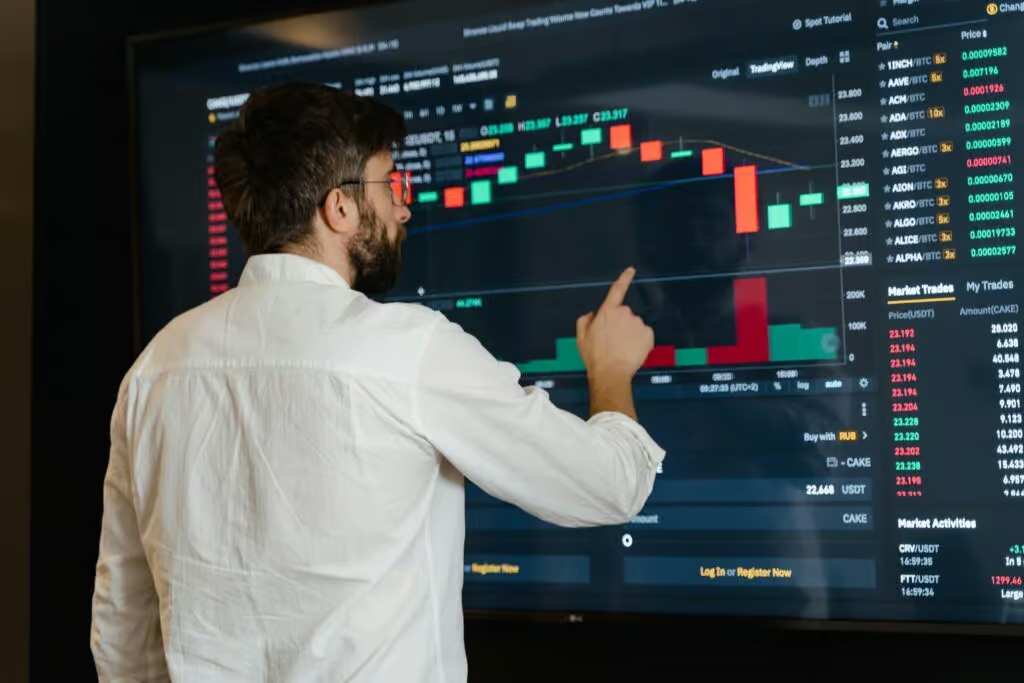
Charts and dashboards give you a clear way to understand complex information without drowning in detail. Heatmaps highlight which currencies strengthen or weaken during specific economic events. During US inflation releases, for example, commodity-linked currencies like AUD and NZD often move in tandem because traders reassess growth expectations. When you see these shifts laid out visually, the patterns become much easier to interpret, and you react faster than traders who wait for written commentary to confirm what the market already signalled.
Many traders use dashboards that track correlations between assets. When US ten-year yields rise, USDJPY often climbs because the yen behaves like a funding currency. Visual tools help you spot these relationships quickly, especially when the market begins to shift around high-impact news. This speed matters because modern trading culture rewards the people who recognise these correlations in real time rather than hours later.
It helps to know how the CPI basket is constructed and why small changes in categories like housing or transportation influence the broader economy. Once you understand the components behind the numbers, you can process market reactions with greater clarity. That awareness makes it easier to separate temporary distortions from meaningful shifts in trend, and it gives you an advantage over traders who only see the headline number without understanding what drove it.
Technology Brings Faster Market Interpretation
Retail traders once needed expensive terminals to follow real-time economic updates, but the landscape changed dramatically. Most trading platforms now integrate feeds from agencies like the Bureau of Labor Statistics and Eurostat. When these institutions release data, platforms push the numbers immediately, giving you the chance to react before the move fully develops.
You also see the impact in mobile alerts. When Jerome Powell delivers a policy speech or when the European Central Bank announces its rate decision, you receive notifications instantly. This immediacy narrows the gap between professional and retail access to information, and it makes speed and awareness central to modern trading culture.
Technology also supports your post-release analysis. You can replay price movements, compare reactions across currency pairs and check whether the market respected previous support and resistance levels. These tools turn raw data into clearer patterns, which helps you refine your approach and build confidence in your interpretation.
Real-time economic data does not promise certainty, but it gives you a stronger base for decision-making. When you pay attention to the steady flow of information from statistical agencies and central banks, you navigate volatility with a calmer perspective. That awareness often becomes the reason your trades feel more deliberate over the long run.